Put green at the flagpole side
Ireland’s flag is a vertical tricolour: green, white and orange from the flagpole side toward the outer edge. With the flagpole side shown on the left, read the bands left to right in that order.
Check the outside edges first. Green belongs beside the flagpole; orange belongs at the opposite edge. White separates them. Remembering only that the flag contains green and orange makes a mirrored attempt easy to miss.
Check the national design on the Irish Defence Forces’ national flag page. Use it to recognize the layout, then check your palette in Color My Flag rather than treating it as an exact HEX answer.
Read vertical bands from side to side
| Region | Color | Checking direction |
|---|---|---|
| Flagpole-side band | Green | Start at the hoist |
| Middle band | White | Check the separator |
| Outer band | Orange | Finish at the fly |
The national design uses equal-width bands. Recognize that structure in the template you receive and use its current controls. Do not assume the game provides a tool for resizing bands.
Do not turn the tricolour into horizontal rows. If you see a vertical template, scan from one side to the other rather than remembering a top-to-bottom palette order from a different flag.
Diagnose a mirror error before a shade error
If your attempt has orange on the flagpole side, the problem is placement. Darkening that orange or brightening the green does not fix the reversal. Correct the order first.
If the order is already right, inspect the selected color families. Orange and red are different intended choices here. Green is not interchangeable with blue merely because another vertical tricolour uses blue. Keep white as the central neutral band rather than tinting it to match an attractive palette.
Use plain descriptions while you work: green at the hoist, white in the middle, orange at the fly. Naming each band’s position helps you catch a reversed order instead of relying on a vague memory of stripes.
Review the two outside edges
Check the edges before you submit, even if the painting looks tidy. The flagpole-side edge should be green; the opposite edge should be orange. Once those are right, inspect the middle white band and your selected shades.
Compare Ireland with the Belgium guide if vertical stripes are your main source of confusion. Both guides require a side-to-side order check, but Belgium’s black-yellow-red palette is different. Do not transfer one country’s color order to the other.
Use the color picker guide to separate color-family selection from tone adjustment. Check your choices in the game; the guide does not guarantee a palette for either flag.
Make the next attempt easier to interpret
If the Ireland prompt returns, keep the correct band arrangement consistent and change one color choice that looked wrong. That comparison can help you learn the picker without changing the underlying design at the same time.
Do not compare an Ireland percentage with an unrelated flag as though it isolates a shade improvement. Different layouts ask you to recognize different features. Use the accuracy guide for a result-review routine.
Watch the countdown and leave time to check the outside edges. Use that routine to manage your time, and check the current mode rules before assuming a speed bonus or any particular scoring rule.
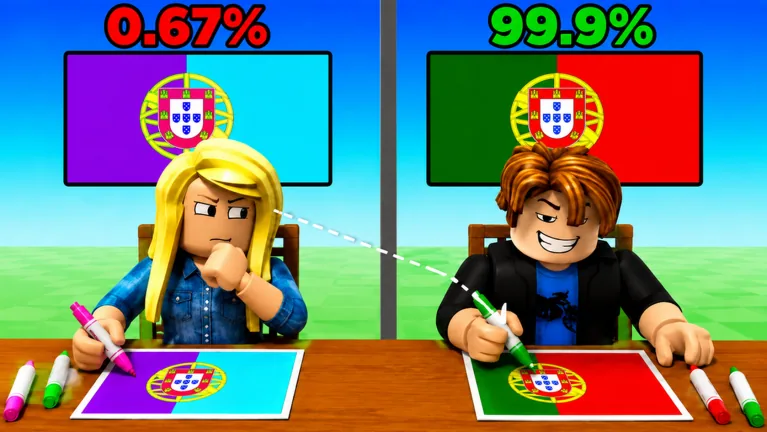
Watch the player attempts in the clip below to follow the gameplay. Do not use a player’s painted palette as an official answer key.
FAQ
Is green on the left or right?
In the usual display with the flagpole side on the left, green is on the left. The defining relationship is green beside the flagpole.
Is the last band orange or red?
Orange. Choose that color family deliberately instead of replacing it with red.
Are Ireland’s bands horizontal?
No. The national flag has three vertical bands, so read the arrangement side to side.
Can this layout guarantee a perfect score?
No. Correct placement gives you the right design. Check deliberate color choices in the game rather than expecting an exact palette or accuracy formula from this layout.